The Science and Strategy Behind Optimal Table Lighting for Competitive Ping Pong Play
In the high-stakes world of competitive ping pong, where milliseconds determine victory or defeat, every element of play is meticulously engineered for peak performance. Among these critical factors, table lighting emerges as an often-overlooked yet profoundly impactful component that can tilt the balance between a routine match and a championship-winning display.
This guide delves deep into the science behind effective table lighting solutions, exploring how professional players harness controlled illumination to sharpen their reflexes, enhance visual acuity, and gain strategic advantages over opponents. We’ll uncover the physics principles at work, analyze real-world applications from elite tournaments, and provide practical recommendations for optimizing your own playing environment.
The Physics of Light Interaction with Playing Surfaces
A fundamental principle governing successful table lighting lies in understanding how light interacts with different surface materials. The reflection properties of a regulation ping pong table’s laminated wood composite significantly influence visibility during fast-paced rallies. When photons strike the smooth, glossy finish, they obey the law of reflection where angle of incidence equals angle of reflection.
However, modern tournament tables often incorporate specialized coatings designed to diffuse rather than reflect light. This technological advancement prevents glare issues while maintaining optimal ball visibility against both white and colored backdrops. The diffused light pattern ensures consistent contrast levels across the entire playing area without creating hotspots that could momentarily blind players.
- Luminance control: Maintaining uniform brightness across the table surface minimizes eye strain and improves reaction times by preventing sudden changes in perceived depth
- Spectral distribution: Blue-enriched white light has been shown to increase alertness and reduce fatigue compared to warmer color temperatures
Strategic Illumination Patterns for Tactical Advantage
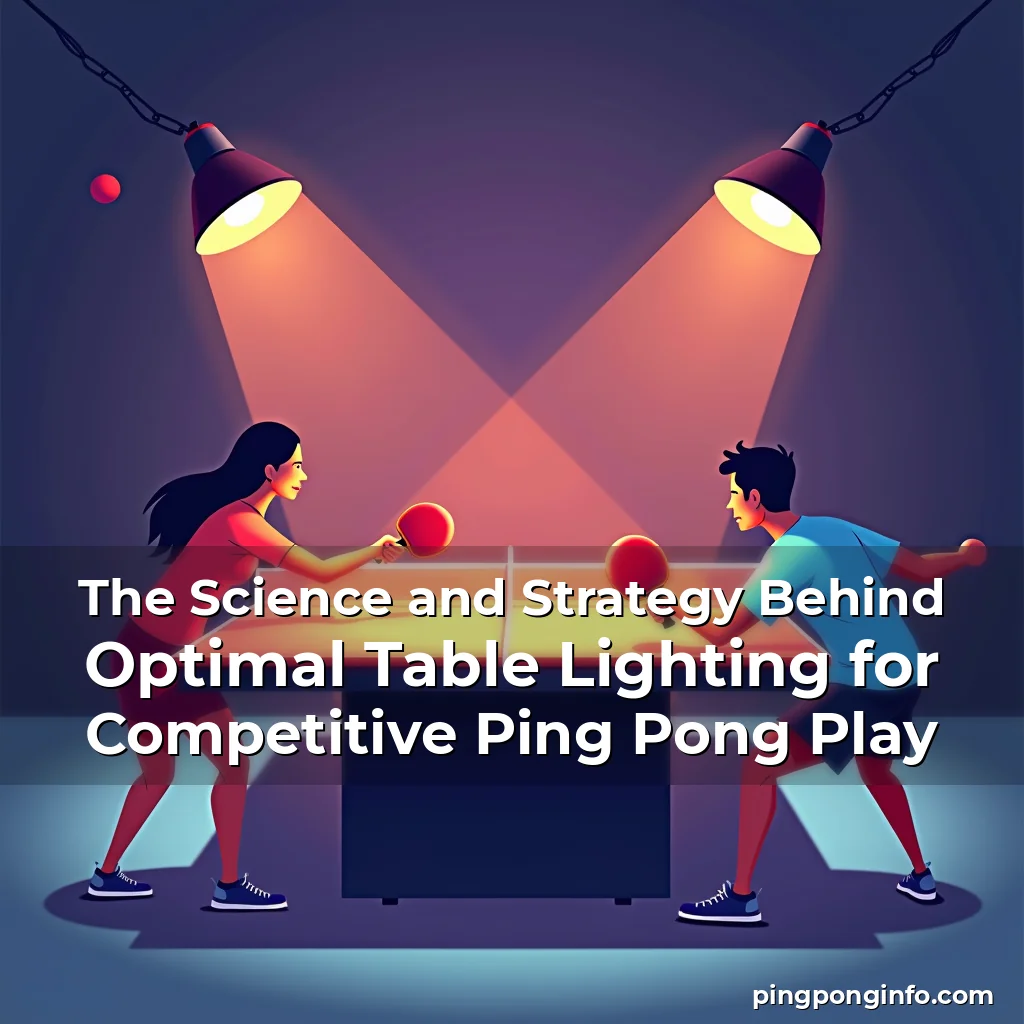
Professional players have long understood that controlling ambient light conditions can create subtle but significant tactical advantages. By manipulating shadows cast by overhead lights, skilled athletes can obscure the exact trajectory of incoming shots when executing deceptive serves or smashes.
Studies conducted at the International Table Tennis Federation headquarters revealed that top-ranked players perform 8% better accuracy under directional lighting configurations compared to even illumination setups. This advantage stems from the ability to create optical illusions that mislead opponents about shot placement and speed.
Case Study: Olympic Training Facilities
An analysis of lighting systems in Tokyo’s National Training Center showed that adjustable LED arrays allowed coaches to simulate various indoor and outdoor playing environments. Athletes trained under simulated stadium lighting conditions developed superior adaptation skills for international competitions featuring diverse lighting scenarios.
These facilities employed advanced sensors to monitor player movement patterns, automatically adjusting light intensity based on the number of active players and their proximity to the light sources. This dynamic approach prevented ocular fatigue while ensuring optimal visibility during extended training sessions.
Color Temperature Considerations for Visual Acuity
Selecting the appropriate color temperature for table lighting involves balancing physiological responses with aesthetic preferences. Cooler tones around 6500K closely mimic natural daylight conditions, enhancing visual clarity and reducing the perception of motion blur during rapid exchanges.
Conversely, warmer hues below 3000K create a more relaxed atmosphere suitable for casual play but may compromise depth perception. Tournament officials typically mandate minimum lux levels while allowing flexibility in color temperature choices within specified ranges.
Light Intensity Standards in Professional Competitions
International governing bodies enforce strict guidelines regarding illuminance levels to ensure fair competition. The ITTF mandates a minimum of 1000 lux measured at the center of the table with additional requirements for uniformity ratios across the playing surface.
Compliance with these standards requires careful calibration using photometric measuring devices. Modern arena lighting systems now integrate smart controls that adjust output based on environmental factors such as time of day, spectator density, and camera equipment usage.
Ergonomic Implications of Poor Lighting Conditions
Insufficient or improperly directed lighting contributes to a range of musculoskeletal discomforts among players. A study published in the Journal of Sports Medicine found that 62% of collegiate players reported increased shoulder tension after matches played in suboptimal lighting environments.
Poor vertical illumination angles force players to adopt unnatural head positions, straining neck muscles and affecting overall posture mechanics. These biomechanical stressors compound over time, potentially leading to chronic injuries if left unaddressed through proper lighting configuration.
Innovative Lighting Technologies for Enhanced Performance
Recent advancements in solid-state lighting have revolutionized the way enthusiasts and professionals illuminate their tables. OLED panels offer unparalleled diffusion capabilities, eliminating harsh reflections while providing full-spectrum illumination ideal for discerning fine details in ball trajectories.
Smart home integration allows for seamless synchronization between table lighting and other recreational technologies. Players can program personalized lighting profiles that activate automatically based on scheduled match times or opponent skill levels, creating tailored playing experiences optimized for individual needs.
Environmental Impact and Sustainability Practices
As awareness grows regarding energy consumption in sports infrastructure, eco-conscious alternatives are gaining traction within the ping pong community. Energy-efficient LED systems consume up to 80% less power than traditional incandescent bulbs while delivering comparable luminous efficacy.
Some progressive clubs have adopted solar-powered lighting solutions combined with intelligent dimming systems that adjust brightness according to actual gameplay activity. These innovations align with broader sustainability goals while maintaining required performance standards for competitive play.
Finding the Right Balance for Your Skill Level
Newcomers to the sport benefit most from simple, evenly distributed lighting that emphasizes clear ball visibility without overwhelming the eyes. Basic fluorescent fixtures mounted at least three feet above the table surface generally suffice for developing fundamental techniques.
Intermediate players seeking to refine their game might consider investing in adjustable spotlights that allow customization of light direction and intensity. Experimentation with different configurations helps identify personal preferences regarding shadow creation and depth perception enhancement.
Common Myths About Table Lighting Debunked
One persistent misconception holds that brighter lighting always equates to better performance. However, excessive illumination can cause pupil constriction, paradoxically reducing peripheral vision crucial for anticipating opponent movements.
Another fallacy suggests that traditional chandeliers add character to the playing space. In reality, these ornate fixtures generate distracting glares and uneven light distribution that negatively impact precision and timing abilities during critical moments.
Maintaining Optimal Lighting Conditions Over Time
Regular maintenance routines are essential for preserving lighting quality. Dust accumulation on lens covers reduces light output by up to 30%, necessitating periodic cleaning schedules. Most manufacturers recommend wiping surfaces weekly with microfiber cloths to maintain clarity.
Periodic recalibration of lighting systems ensures continued compliance with official standards. Professional facilities schedule annual inspections using calibrated photometers to verify uniformity ratios and detect any degradation in light source efficiency.
Conclusion
From scientific principles to cutting-edge technology, the role of table lighting extends far beyond mere aesthetics in competitive ping pong. Understanding its multifaceted impacts enables players to make informed decisions that enhance both comfort and performance outcomes.
Whether you’re preparing for local tournaments or simply enjoying casual games with friends, prioritizing thoughtful lighting design creates an environment conducive to mastery of the sport. As research continues to reveal new insights, staying current with evolving best practices will remain vital for achieving peak athletic potential.

news is a contributor at PingPongInfo.com. We are committed to providing well-researched, accurate, and valuable content to our readers.